

There’s a moment most divers recognise, even if they don’t usually name it. A shape moves at the edge of visibility — a ray, perhaps, or a shark — and then it’s gone. You saw it. You can log it. But the feeling is fleeting.
In the Seychelles, that moment often becomes something else. Not always. Not on every dive. But often enough that you begin to notice a pattern forming. The dives that stay with you aren’t the ones where you saw the most. They’re the ones where something stayed a little longer.
That distinction becomes clear when diving in the Seychelles.
Why Sightings are Easy to Count — and Encounters are Not
Sightings are neat. They fit into logbooks and post-dive conversations. You can list them without hesitation.
Encounters are messier.
They involve duration, behaviour, and a certain shared stillness. They’re harder to summarise. Sometimes you don’t even mention them right away, because they don’t feel like “events” so much as moments you were briefly part of.
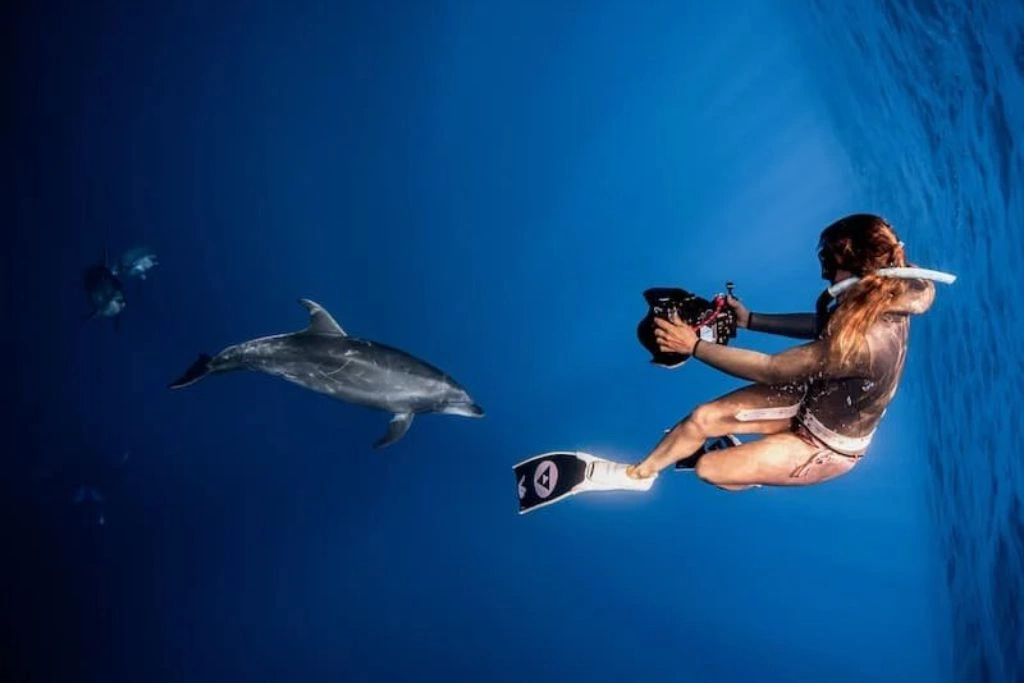
Divers tend to remember encounters differently. Not as facts, but as impressions. The way an animal moved. The space it allowed you to occupy. The sense that you weren’t just observing — you were present.
Movement Changes How Interactions Unfold Underwater
Seychelles diving is shaped by motion. Surge, swell, and shifting light are part of the environment, not occasional interruptions.
That movement changes how marine life appears and disappears. Animals rarely enter the frame cleanly and exit on cue. They drift in. Circle. Fade back into blue, sometimes returning from another angle.
As a diver, you adapt. You stop chasing clean views and start allowing space. You hover. You wait. You let the water do some of the work for you.
Encounters here often feel less like meetings and more like overlaps — two paths crossing briefly in a moving environment.
Why Patience Matters More Than Being in the “Right Place”
There’s a temptation, especially among experienced divers, to rely on positioning. Be here at this depth, at this time, and something will happen.
In the Seychelles, patience tends to outperform precision.
Staying still near a granite outcrop. Lingering when nothing seems to be happening. Letting the dive stretch without forcing momentum. These are the moments when encounters quietly take shape.
Animals respond differently to calm presence than to pursuit. That’s not unique to Seychelles, but the environment amplifies it. Movement rewards those who wait rather than those who rush.
Brief Appearances Versus Shared Moments
A turtle passing once is a sighting.
A turtle that slows, adjusts its path, and continues alongside you for a while — that’s something else.
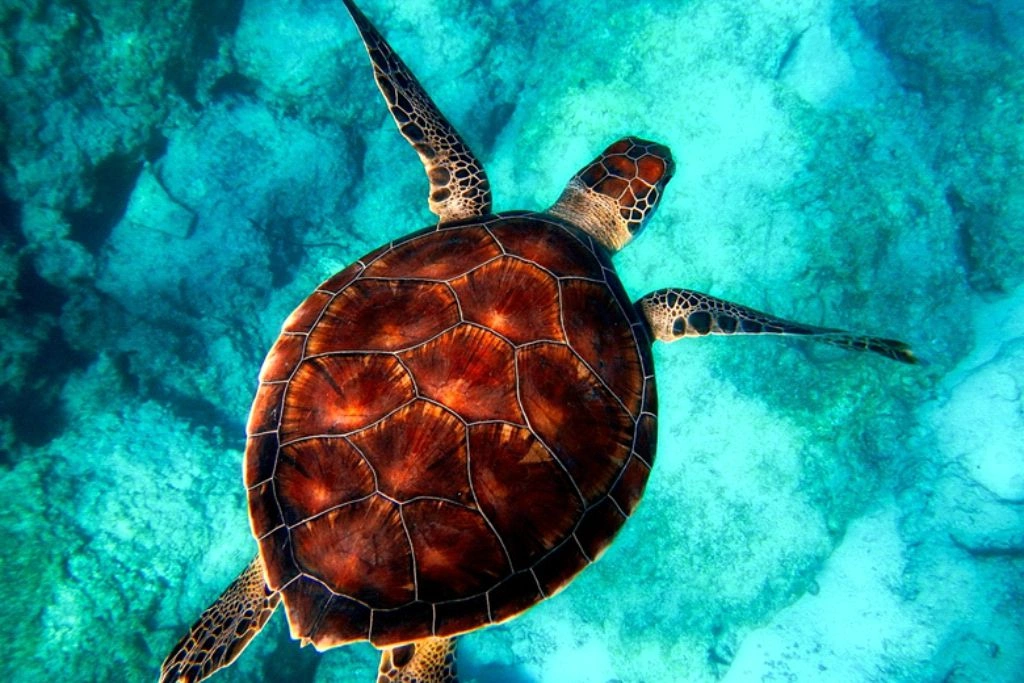
The Seychelles produces fewer dramatic fly-bys than some destinations, but more of these extended, unhurried interactions. Rays that circle rather than cut across your view. Sharks that cruise the periphery instead of vanishing immediately.
These moments don’t announce themselves. You realise they mattered later, usually after the dive, when recalling the day feels different from simply recounting it.
Granite Landscapes Encourage Lingering, not Scanning
Much of this comes back to the terrain.
Granite formations break sightlines. They create pockets of space where life emerges gradually rather than all at once. You can’t scan a reef in one sweep. You have to move around it. Sometimes wait for it to reveal itself.
This naturally slows divers down. The urge to cover distance fades. You spend longer in one place without consciously deciding to.
Encounters benefit from that stillness.
Why Photographers Often Understand this Instinctively
Photographers tend to grasp this difference early. Not because they’re more patient by nature, but because their craft demands it.
Waiting for behaviour rather than appearance. Allowing animals to settle. Accepting fewer frames in exchange for better moments. All of this aligns neatly with how Seychelles diving unfolds.
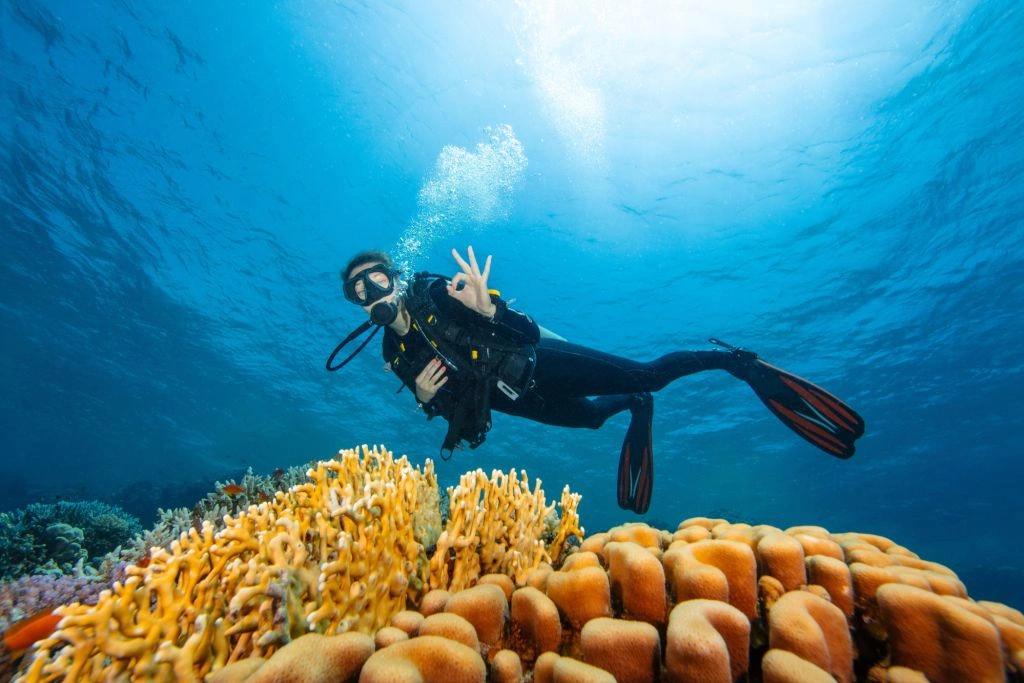
Even non-photographers start adopting similar habits after a few days. You realise that seeing less, but seeing it longer, often feels richer.
Encounters aren’t Only About Large Animals
It’s worth saying this clearly. Encounters don’t require size.
They happen with smaller fish holding position against surge. With octopus emerging cautiously, then relaxing. With cleaning stations that continue operating despite your presence.
These moments don’t dominate highlight reels, but they tend to dominate memory.
How repeated dives quietly change what you notice
On early dives, attention often goes outward. What’s here? What might appear next?
Later dives feel different. You begin to notice how things behave rather than what they are. You stop measuring success by species count and start measuring it by immersion.
The dives don’t necessarily reveal more. You simply see differently.
What Stays With You After the Dive
Not every dive in the Seychelles delivers an encounter. Some are quiet. Some feel observational rather than participatory. And that’s part of the appeal.
The unpredictability means you never quite know which dives will linger in your thoughts. Often, it’s not the most dramatic one.
Some dives are about what you see. Others are about what happens while you’re there. The Seychelles has a way of teaching the difference — gently, and over time.