
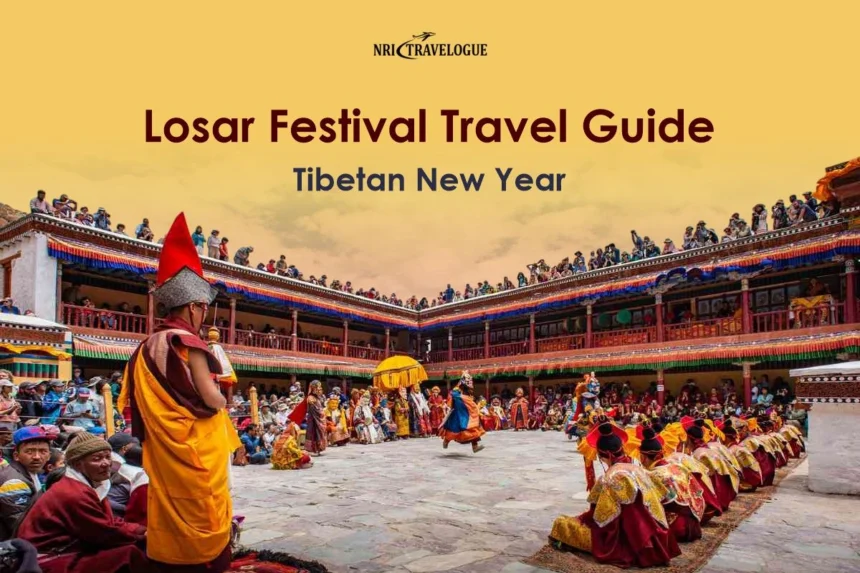
If you are looking for a festival that feels spiritual, colorful, meaningful and deeply cultural then Losar should be on your travel list. Losar is a Tibetan new year. It is one of the most important celebrations for Tibetan Buddhists. It marks the beginning of a new year based on the lunar calendar. But Losar is not just about changing the calendar, it’s about cleaning the past, welcoming good energy, praying for blessings , celebrating family and honoring traditions that are hundreds of years old. In recent years Losar has become one of the most searched winter cultural festivals in the Himalayan region. Today you can see a lot of travelers choosing cultural experiences over overcrowded party destinations. Snow monastery and prayer chants butter lamps glowing in cold mountain air this is the kind of travel that people are looking for.
What is Losar and Why is it Important?
The word Losar comes from 2 Tibetan words: lo, meaning year and sar means new. So, Losar means new year. But spiritually it means much more. Losar is a time to clean homes to remove negative energy, make offerings to deities and pray for good luck. You can also spend time with family visiting monasteries and prepare special food. It usually falls between. January and early March depend on the lunar calendar. The first three days are the most important: families gather, monasteries hold prayer ceremonies and communities organize cultural performances.
Losar in Ladakh
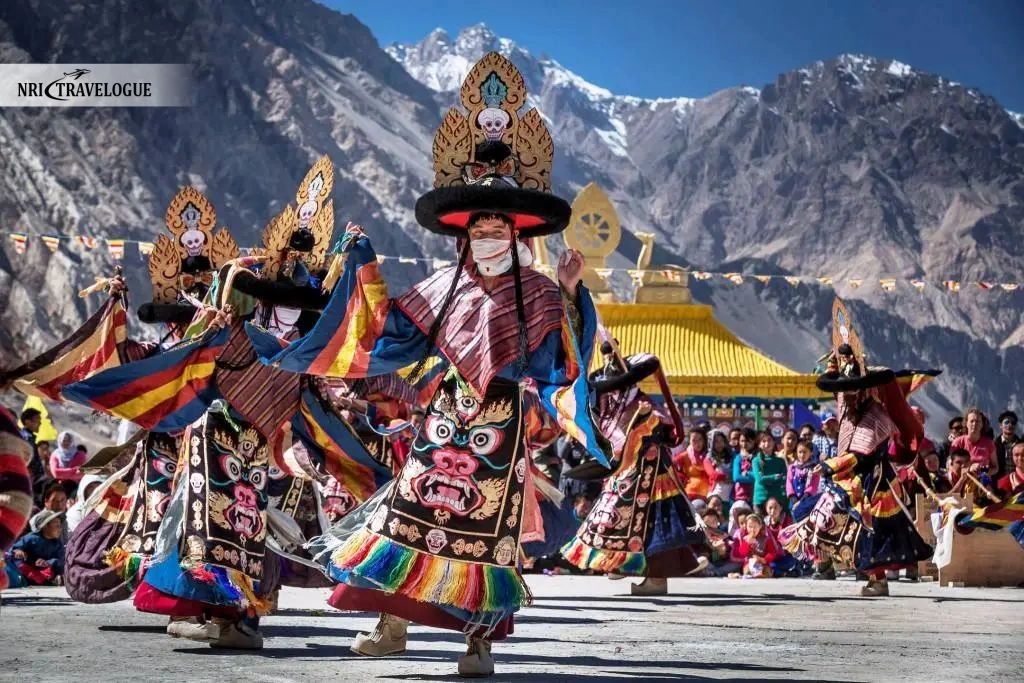
Right now, Ladakh is the most trending Losar destination. Because of its dramatic winter landscapes, snow covered mountains and frozen rivers. A lot of monks here are performing masked cham dances in monastery courtyards. In Ladakh Losar feels really special as the cold weather adds beauty and prayer flags flutter in the freezing wind. The dances are a highlight as monks wear large colorful masks representing protecting the deities and the dance symbolizes the victory of good over evil.
February can be very cold, and you must carry heavy winter clothing, thermal layers, woolen sweaters and down jackets. But if you are prepared the experience is unforgettable. Flights operate even in winter, but weather delays can happen and you need to book hotels in advance. If you love photography, then Losar is a charm here.
Losar in Dharamshala
If Ladakh feels too extreme, Dharamshala is a great option. Dharamshala, especially McCleod Ganj, is home to a large Tibetan community.
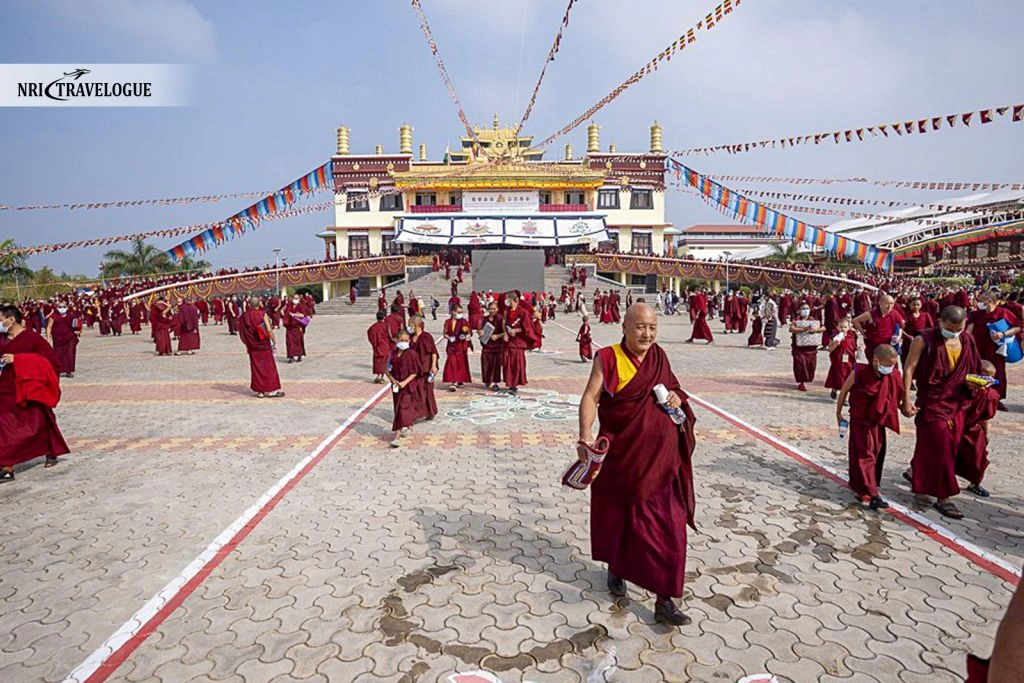
It is also where the Tibetan government in exile is based. Losar celebrations here are spiritual and also welcoming. Monasteries hold prayers and Tibetan families wear traditional dresses, you must choose garam masala as the road accesses very easily and there is no extreme cold. You can attend monastery prayers and still enjoy comfortable stays.
Losar and Gangtok
Sikkim also celebrates Losar beautifully. Gangtok monastery is a key place to witness ceremonies. Sikkim offers a mix of Tibetan and local Himalayan additions.
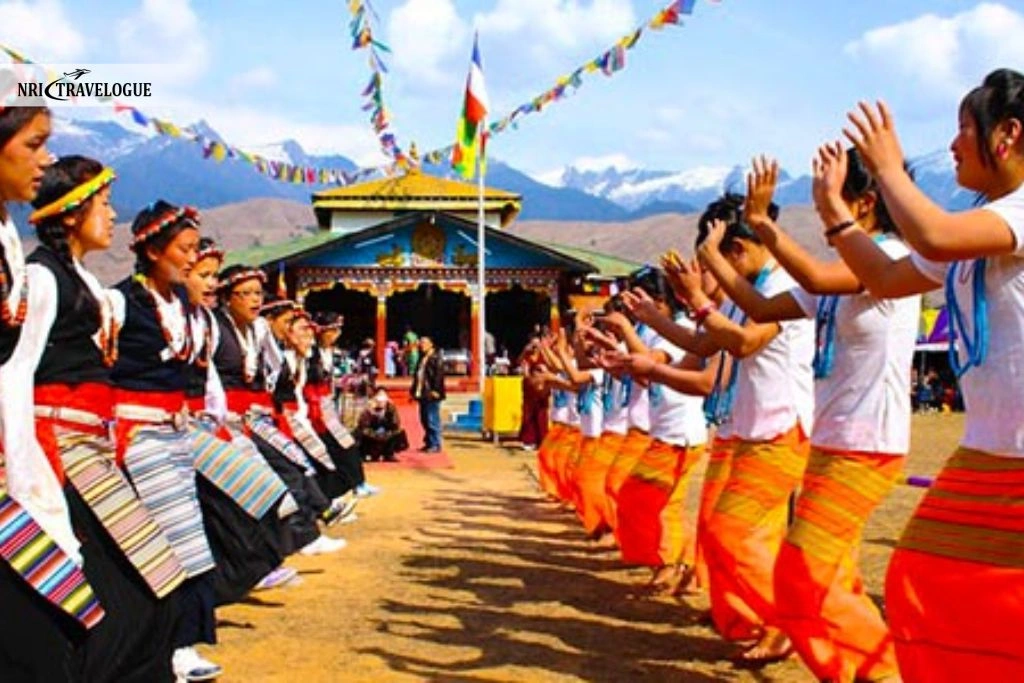
The weather in February is completely cool but not extreme. The environment feels clean and peaceful. If you want a quieter, Losar experience, then Sikkim is ideal for you.
Losar in Nepal
Nepal celebrates Losar in different Tibetan communities, especially around Boudhanath Stupa in Kathmandu. The stupa area becomes vibrant with prayer ceremonies and additional music. Nepal also celebrates different types of Losar.
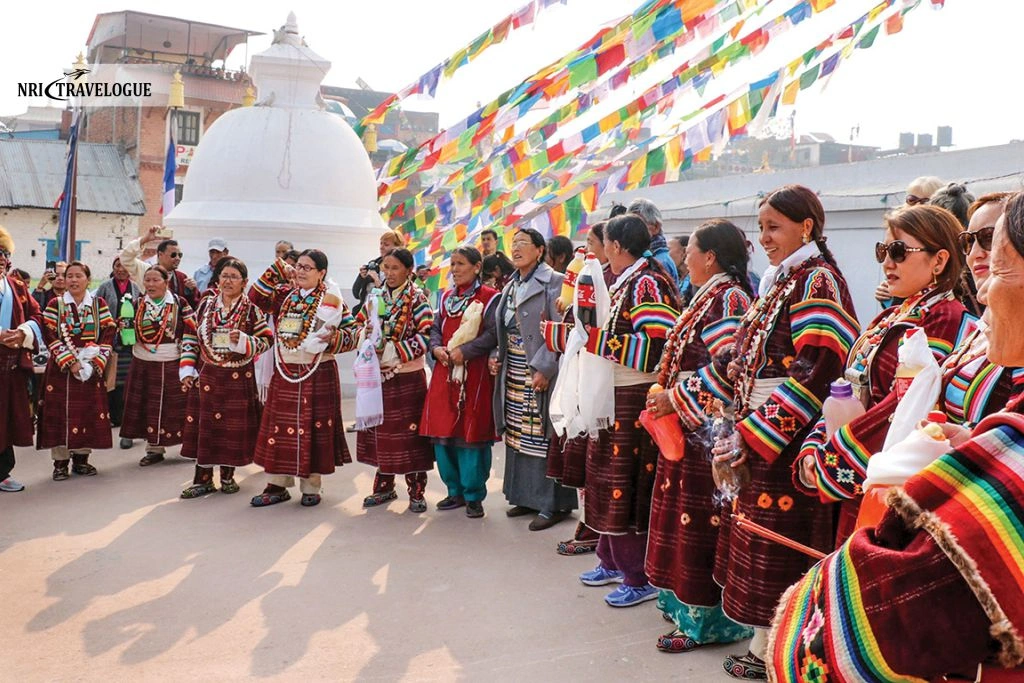
The advantage of Nepal is easier international access and less extreme weather. You can combine Losar with Kathmandu sightseeing and Himalayan views.
Losar in Bhutan
Bhutan celebrates Losar with royal elegance and traditional depth. Monasteries organized mass dances and families gathered in traditional homes.
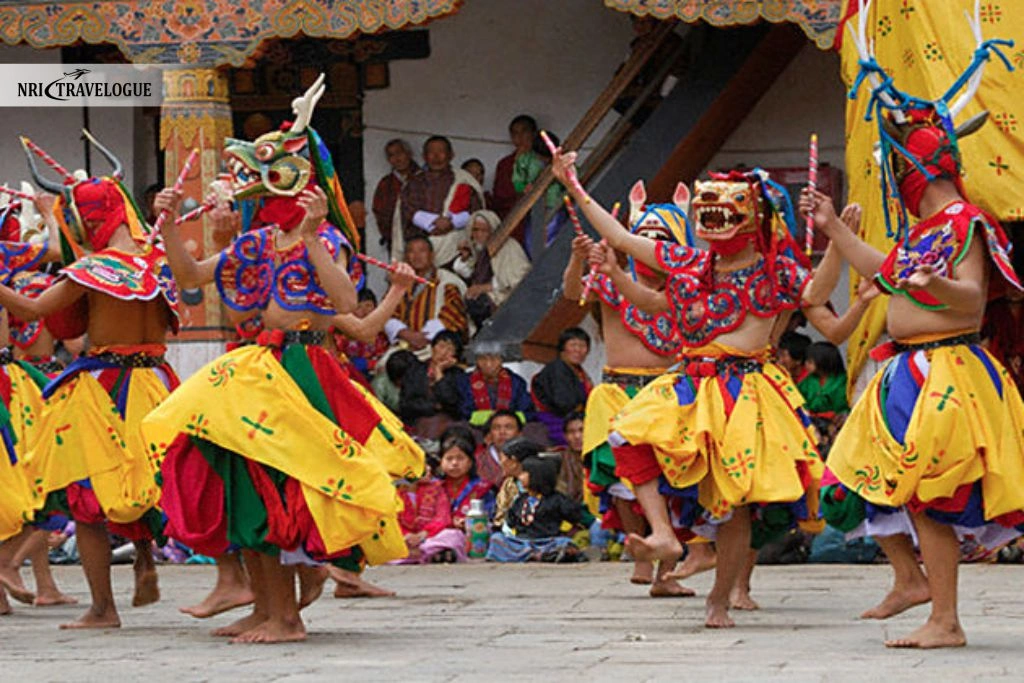
Losar feels deeply preserved and authentic. Travel here requires advanced planning because of tourism regulations and the experience feels pure and spiritual.
Understanding Cham Dance
It is central to Losar celebrations. Here you can see monks wearing large masks and heavy costumes. The dance movements are slow and symbolic. It represents the removal of evil forces and the welcoming of positive energy.
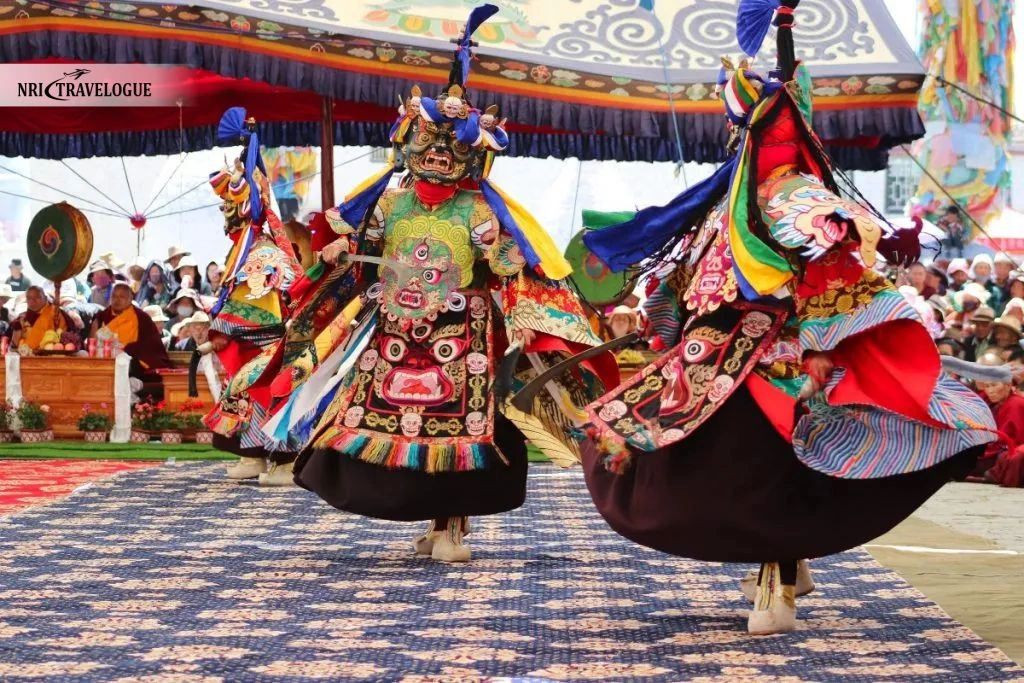
It is not entertainment, it is sacred. When you watch the dance in the monastery courtyard surrounding mountains you feel connected to something ancient.
Traditional Losar food
Families prepare special dishes like:
- Guthuk – a noodle soup eaten on New Year’s Eve
- Khapse – deep-fried sweet snacks
- Butter Tea – salty tea made with butter
- Tsampa – roasted barley flour
How Many Days Should You Plan?
You need a minimum of three to four days, ideally five to seven days are OK. This allows you to attend Losar ceremonies and explore local culture.
Budget Planning
Ladakh winter travel is expensive because of heating and transport. Dharamshala and Nepal are more affordable while Bhutan is the most expensive because of government tourism policy. You need to plan accommodation and transport early.
Cultural Etiquette
You need to dress modestly, remove shoes inside temples and not disturb prior rituals. You must ask before taking close-up photos of monks and speak softly inside monasteries full respect brings better experiences.
Why is Losar Trending Globally?
Travelers today are choosing meaningful travel. People want cultural depth, not just party festivals. Losar offers spirituality, snow landscapes, and colorful traditions. Social media has made Ladakh Losar especially prominent.
The Meaning Behind Losar Rituals
Losar is not about celebration, it’s about cleansing, renewal and attention. Before the festival begins you can see people cleaning their homes carefully, the cleaning is symbolic. It represents removing negative energy and clearing away problems from the past year. Old prayer flags are replaced with new ones. Butter lamps are prepared and offerings are arranged neatly .
Combining Losar With Slow Himalayan Travel
One beautiful way to experience Losar is to slow down your travel pace. Instead of rushing from one monastery to another, spend time walking through small streets. You can notice prayer flags on rooftops and listen to distant chants. You can watch children playing in traditional dress. In Nepal you can walk around the stupa in the evening as butter lamps flicker. In Sikkim you can just enjoy peaceful mountain views after a monastery visit. In Ladakh you can sit quietly in a heated cafe and reflect on the day.
Why Does Losar Leave a Lasting Impression?
Many festivals feel exciting, Losar feels meaningful. The combination of ritual community prayer and celebration creates balance. You just witnessed joy without chaos and you see tradition without commercialization. When you return home you might remember the sound of monastery ponds and the sight of colorful masks during dance or warmth of butter tea on a cold morning. These are simple moments but they stay in your heart. That is the only reason why Losar continues to attract travelers looking for something deeper than just a holiday
So, Losar is not just a festival, it’s a feeling. It teaches you to clean your past and welcome new beginnings. It invites you to Slow down and listen to prayer chants echoing through mountain valleys. Whether you celebrate in Ladakh or Dharamshala or Bhutan, Losar will give you something deeper than just travel memories.